TL;DR - Lots of reading, not a lot of beer, or much else for that matter.
Book - Rosewater:
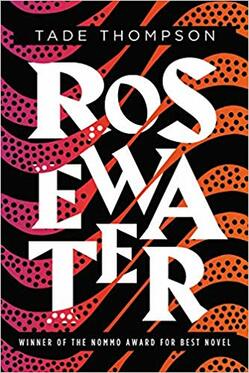
During one of my walk-around-while-on-a-call sessions a few weeks ago, I stopped by the downtown Coles and saw an intriguing book called “Rosewater” by Tade Thompson. I picked up a copy from EPL a few days later, and was hooked immediately. First-person, timeline shifting, science fantasy, with interesting characters. Really good stuff.
I mentioned a few weeks ago that I had supported a number of Kickstarter initiatives. One of them was an Afro-centric role-playing supplement called Swordsfall, which stands out in stark contrast to the typical medieval Euro-centric campaigns. With that in my thoughts as I read Rosewater, which is set in Nigeria, I realized how little African references I have. The names, places, idioms, and references were foreign to me. This was a good reminder of the need to push oneself to gain different perspectives and opinions.
Which brings me to my next point:
A solid percentage of the items that show up in this blog come from Warren Ellis and his weekly newsletter. This quote came from that newsletter:\
I’ve said this to you before, and I’ll say it again: always be checking your practice. Times change and so do you.\
New music - Contemporary Protest Music:
Again from the files of a certain Warren Ellis, the four tracks linked here come from one of Ellis’s weekly newsletters. This is not background music to chill to. These four songs are made to motivate and inspire, and to push the listener to action. The long version of the track names leave no doubt as to the artist’s political position. For example, “The greatest trick the Tories ever pulled was convincing working class British voters, who feel left behind, to blame the EU & immigrants for their troubles while also convincing them to continue voting for the very party actually responsible.”
The uselessness of precedents in the face of radical change:
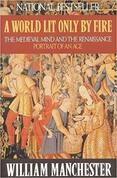
In my endless pile of books with the “Currently Reading” status is “A World Lit Only By Fire” by William Manchester, a book I purchased in the mid 90s and am only now reading. It covers the history and shift in focus as Europe moved from medieval times to the Renaissance.
Early in the book, Manchester provides a quote that perfectly captures the issues with using the past as a guide for the future in the face of enormous change:
Even the wisest of them were at a hopeless disadvantage, for their only guide in sorting it all out - the only guide anyone ever has - was the past, and precedents are worse than useless when facing something entirely new.
Interlude, courtesy of “Cuckoo’s Calling”:
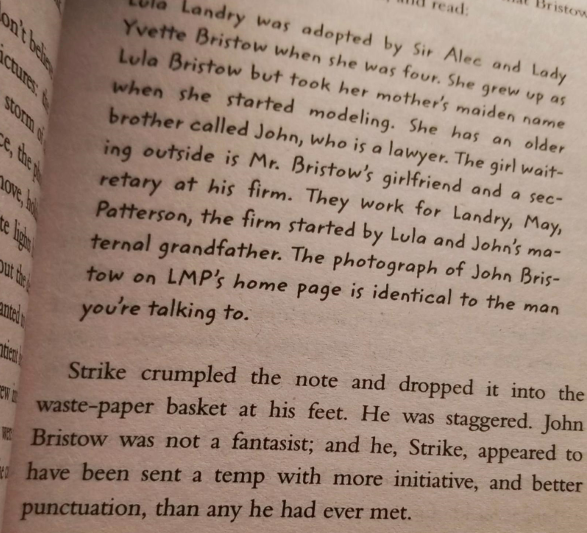
Punctuation. It’s important.
Wisdom from the Dojang:
The fine folks at Elite Taekwondo provide this valuable advice in their most recent newsletter.
| It’s not who ’s good, it’s who’s left." – Prof. Chris Haueter What does that mean? To me, it means that our presence and commitment to BJJ carries more weight than any accolades, medals, or belts we hold. The great competitors of BJJ push our sport to evolve, and have become the familiar faces of BJJ, setting standards, creating new techniques, and leading the charge for the recognition it deserves. But this is not the only way to be successful and contribute to BJJ. If you are young, strong, and athletic, those attributes will eventually dwindle. If you are a decorated competitor in the prime of your career, that too, although admirable, will not be the case forever. We cannot rest our worth on the fickle. There has to be a greater purpose. … So how do you judge your success in BJJ? Success in BJJ is not stopping. If you’re on the mat, you are succeeding. | Picture |
New words:
Lots of reading this week, so lots of new words as a result. (I sometimes feel so illiterate. I should have known many of these, since they weren’t really “new”.)
ves·tig·i·al
[veˈstij(ē)əl]
ADJECTIVE
- forming a very small remnant of something that was once much larger or more noticeable.
vi·tu·per·a·tive
[vīˈt(y)o͞opəˌrādiv, vəˈt(y)o͞op(ə)rədiv]
ADJECTIVE
- bitter and abusive.
myth·o·ma·ni·a
[ˌmiTHəˈmānēə]
NOUN
- an abnormal or pathological tendency to exaggerate or tell lies.
Bac·cha·na·li·a
[ˌbakəˈnālyə]
NOUN
- the Roman festival of Bacchus.
- (bacchanalia)
drunken revelry.
- (bacchanalia)
pen·u·ry
[ˈpenyərē]
NOUN
- extreme poverty; destitution.
plan·gent
[ˈplanjənt]
ADJECTIVE
literary
- (of a sound) loud, reverberating, and often melancholy.
lep·o·rine
[ˈlepərīn, ˈlepərin]
ADJECTIVE
- of or resembling a hare or hares.
des·ul·to·ry
[ˈdesəlˌtôrē]
ADJECTIVE
- lacking a plan, purpose, or enthusiasm.
po·grom
[ˈpōɡrəm, pəˈɡräm]
NOUN
- an organized massacre of a particular ethnic group, in particular that of Jews in Russia or eastern Europe.
ca·tab·o·lism
[kəˈtabəˌlizəm]
NOUN
biology
- the breakdown of complex molecules in living organisms to form simpler ones, together with the release of energy; destructive metabolism.
fet·ter
[ˈfedər]
NOUN
- a chain or manacle used to restrain a prisoner, typically placed around the ankles.
VERB
- restrain with chains or manacles, typically around the ankles.
ruc·tion
[ˈrəkSHən]
NOUN
informal
- a disturbance or quarrel.
er·satz
[ˈerˌzäts, ˈerˌsäts]
ADJECTIVE
- (of a product) made or used as a substitute, typically an inferior one, for something else.
- not real or genuine.
mor·dant
[ˈmôrdnt]
ADJECTIVE
- (especially of humor) having or showing a sharp or critical quality; biting.
“a mordant sense of humor”
fe·tor
[ˈfēdər]
NOUN
- a strong, foul smell.
tu·mes·cent
[t(y)o͞oˈmes(ə)nt]
ADJECTIVE
- swollen or becoming swollen, especially as a response to sexual arousal.
guile
[ɡīl]
NOUN
- sly or cunning intelligence.
con·ur·ba·tion
[ˌkänərˈbāSH(ə)n]
NOUN
- an extended urban area, typically consisting of several towns merging with the suburbs of one or more cities.
shrive
[SHrīv]
VERB
archaic
- (of a priest) hear the confession of, assign penance to, and absolve (someone).
in·e·luc·ta·ble
[ˌinəˈləktəb(ə)l]
ADJECTIVE
- unable to be resisted or avoided; inescapable.
u·su·ry
[ˈyo͞oZH(ə)rē]
NOUN
- the illegal action or practice of lending money at unreasonably high rates of interest.
im·pu·dic·i·ty
[ˌimpyəˈdisədē]
NOUN
formal
- lack of modesty.
bant·ling
[ˈbantliNG]
NOUN
archaic
- a young child.
vi·ti·ate
[ˈviSHēˌāt]
VERB
- spoil or impair the quality or efficiency of.
- destroy or impair the legal validity of.
don·jon
[ˈdänjən, ˈdənjən]
NOUN
- the great tower or innermost keep of a castle.
a·lac·ri·ty
[əˈlakrədē]
NOUN
- brisk and cheerful readiness.
rec·on·dite
[ˈrekənˌdīt, rəˈkänˌdīt]
ADJECTIVE
- (of a subject or knowledge) little known; abstruse.
es·cu·lent
[ˈeskyələnt]
ADJECTIVE
- fit to be eaten; edible.
NOUN
- a thing, especially a vegetable, which is fit to be eaten.